Cuff vs stack: the short answer
Cuffing looks better when the hem is longer than the shoe needs and you want a clean, deliberate line that lets the footwear show. Stacking looks better when the denim is stiff enough to hold folds and the leg is slim or tapered, so the extra length bunches evenly instead of pooling into one heavy break.
Neither option wins by default, and the choice is rarely permanent. The trade-off comes down to four things: how much extra length you have, how the fabric behaves, what shoes you are wearing, and whether you want the leg to read long and clean or relaxed and textured.
What cuff and stack actually mean
Cuffing controls where the hem ends; stacking lets the hem land and shapes how the excess fabric settles.
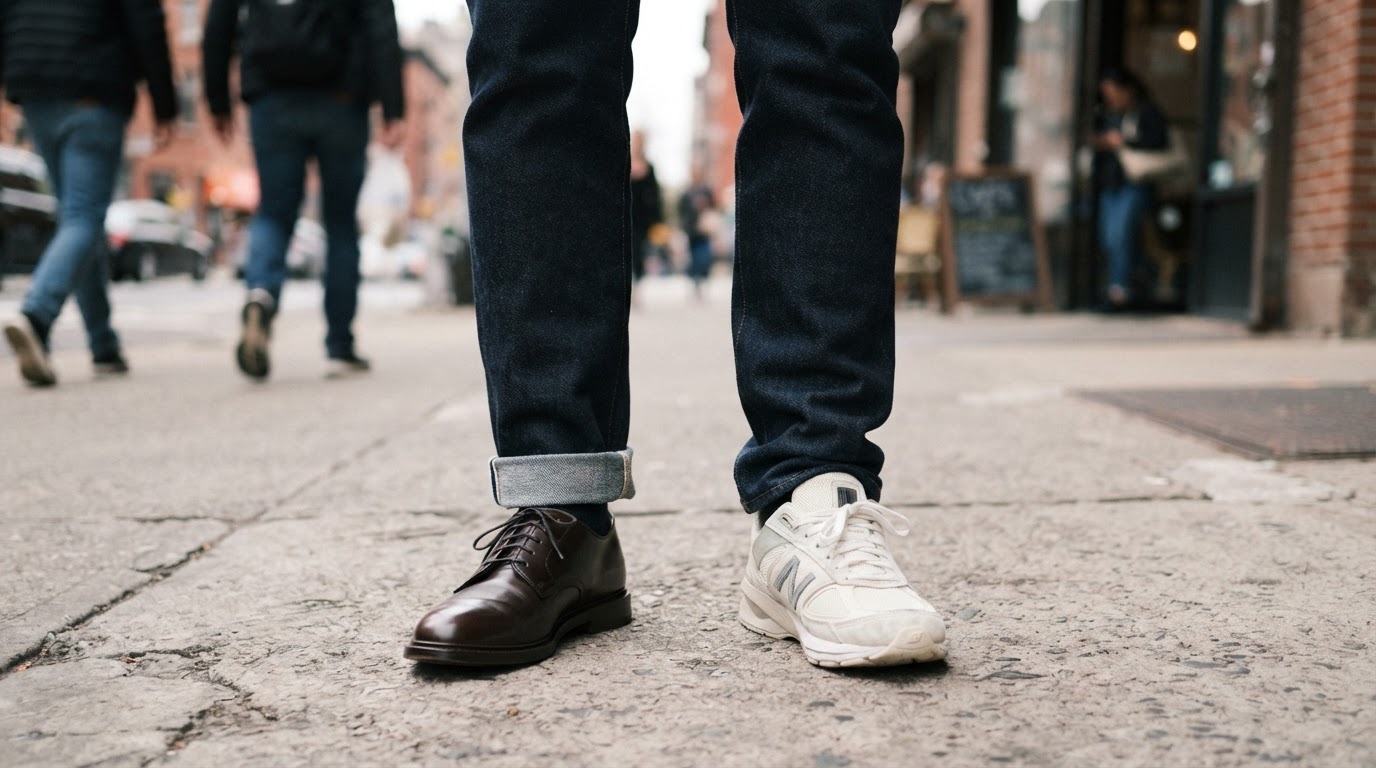
A cuff is a fold or roll at the bottom of the leg: you turn the hem upward once or twice so the denim stops just above the shoe. The result is a horizontal line, a shorter-looking leg, and a clear view of the shoe.
A stack is what happens when you leave the full length in place and let the extra denim fold over itself around the ankle. Well-behaved stacks form two or three soft, even folds; a bad one collapses into a single heavy puddle that drags on the shoe.
Quick answers
- Hem pooling on your shoes: Cuff. A single roll lifts the hem off the shoe and removes the puddle.
- Stiff raw denim, slim or tapered cut: Stack. Rigid fabric holds even folds better than it holds a roll.
- Wide or baggy leg: Cuff once, wide and flat. A tight double roll turns wide fabric into a bulky ring.
- Boots: Stack over the shaft in one or two folds, or cuff once above the boot when you want the boot to lead.
- Loafers, derbies, low sneakers: Cuff. A clean hem keeps the ankle line from swallowing a low-profile shoe.
- Shorter frame: Stay minimal. A narrow single cuff or a clean no-break reads longer than a deep stack.
- Taller frame: Either works. Stacks add weight at the ankle; cuffs add crispness.
When to cuff your jeans
Cuff when the hem is longer than the shoe needs, when the fabric rolls flat, and when you want the shoe and ankle to get some attention.
A single cuff of roughly half an inch to one inch is the safe default. A second roll shortens the leg further and gives a more deliberate, old-school look, which is why double cuffs show up so often with loafers and boots.
Cuffing works best on straight, slim, and tapered jeans in light to mid-weight denim, especially with loafers, derbies, low-profile sneakers, and boots you want to show. It also helps when you want a sharper line for a smart-casual outfit.
Skip the cuff when the fabric is heavy enough that the roll becomes a thick ring, when the leg opening is so wide that the fold adds bulk, or when you want one uninterrupted vertical line. In those cases, a tailor's hem or a clean stack usually looks better than a roll.
When to stack your jeans
Stack when the denim is long, slim, and stiff enough to fold without collapsing, and when you want a relaxed break instead of a sharp one.
Stacks are the natural look for raw and heavy denim, tapered fits, and longer inseams. Leave the full length, let the fabric settle over the shoe or boot, and aim for two or three even folds around the ankle.
A stack works when the folds are even, the fabric does not drag on the ground, and the ankle looks intentional rather than swollen. It fails when one thick fold swallows the shoe, when the denim is so soft that it clumps, or when the extra length is simply too much for the leg opening.
The four checks that decide it
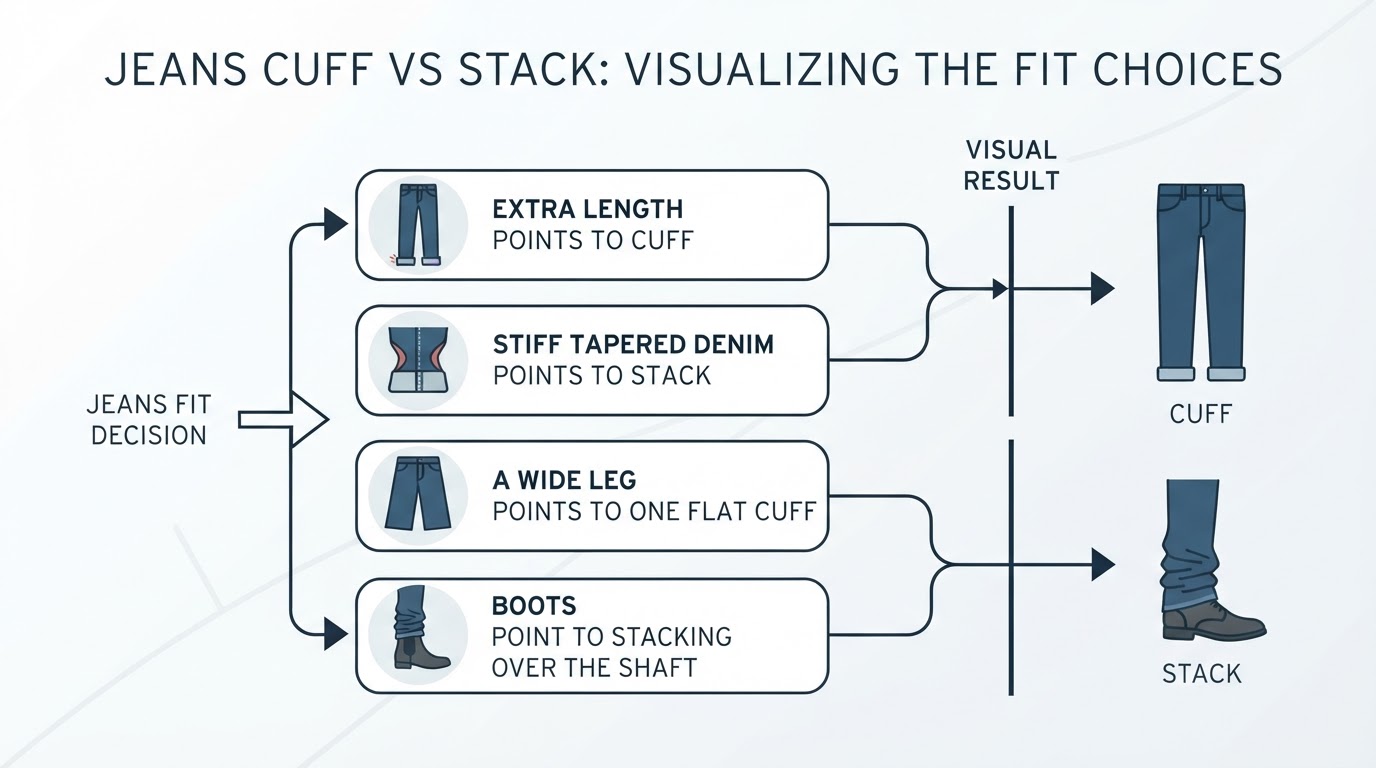
Four checks settle the choice: extra length, fabric behavior, footwear, and the silhouette you want.
Check | Lean cuff | Lean stack |
|---|---|---|
Extra length | More than about an inch past the shoe, or pooling at the front | Enough length to form two or three folds without dragging |
Fabric | Light to mid-weight denim that rolls flat | Stiff, heavy, or textured denim that holds a fold |
Footwear | Loafers, derbies, low sneakers, boots you want to show | Chunky sneakers, work boots, taller boot shafts |
Silhouette | A clean vertical line, shorter and sharper | A relaxed break with weight and texture at the ankle |
Height matters here too. Both cuffs and stacks break the vertical line, so shorter frames usually look better with a narrow single cuff or a clean no-break, while taller frames can carry deeper stacks. The same checks apply to women's jeans: cut, fabric, footwear, and the desired silhouette decide, not the label.
How to test a cuff or stack in 30 seconds
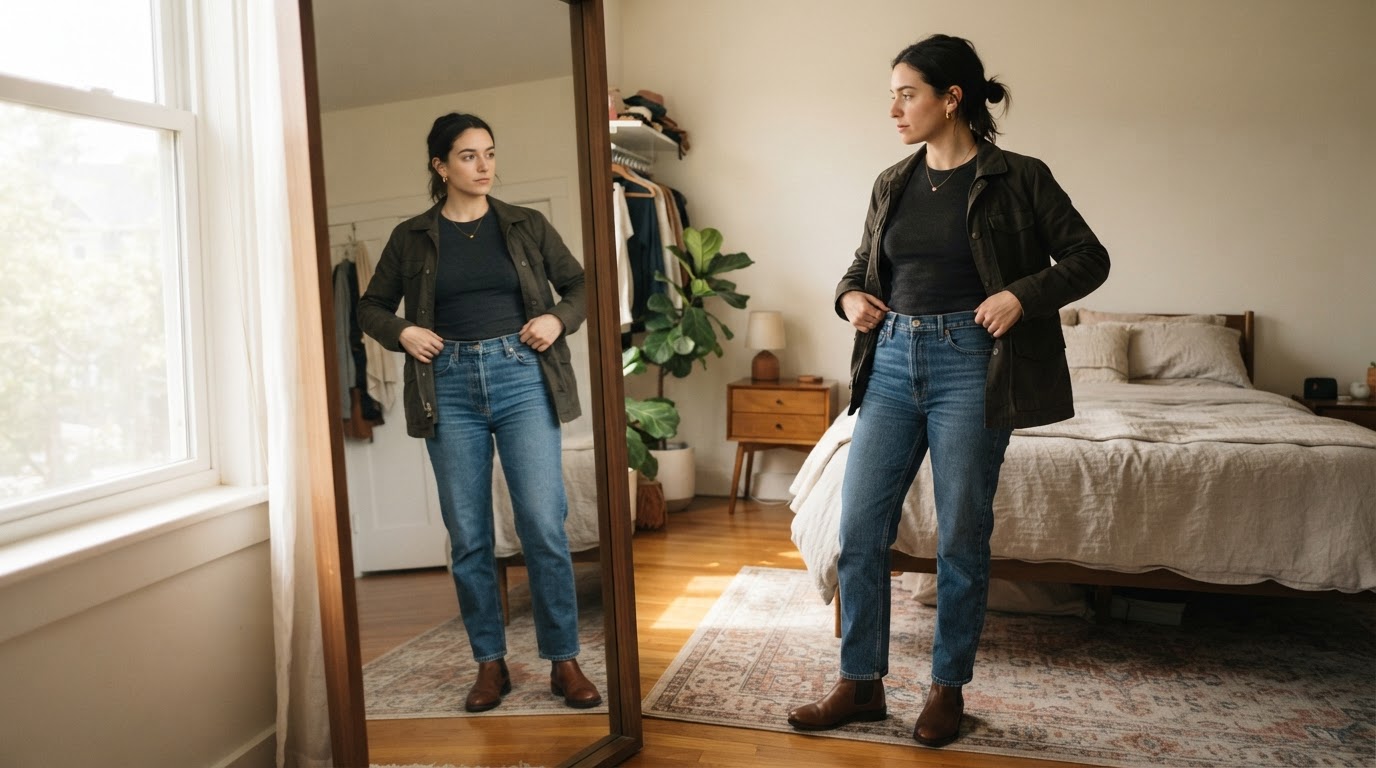
Decide with the shoes you will actually wear, because the same jeans can look right cuffed with loafers and wrong stacked with them.
- Put on the jeans and the shoes you plan to leave in.
- Stand in front of a full-length mirror, or take a photo from knee height.
- Check where the hem sits: a cuff should end at or just above the shoe, and a stack should form two or three even folds.
- Walk a few steps and look again. If the hem drags or the cuff unrolls, the fold is wrong for that fabric.
- Change one thing at a time: one extra roll, one less fold, or a different shoe. Keep the version that needs the smallest correction.
Getting a second opinion before you leave
If you want a second opinion, you have a few options. Community threads such as Reddit give you free opinions on whether a cuff or a stack reads better, though strangers bring different tastes and replies can take a while. This article is published by the team behind Dress Better, so we have a stake in the app described next. Dress Better is a web app that reviews a full-body outfit photo and reports what is safe to keep plus the smallest conflicts to fix, with proportion as one of its four checks.
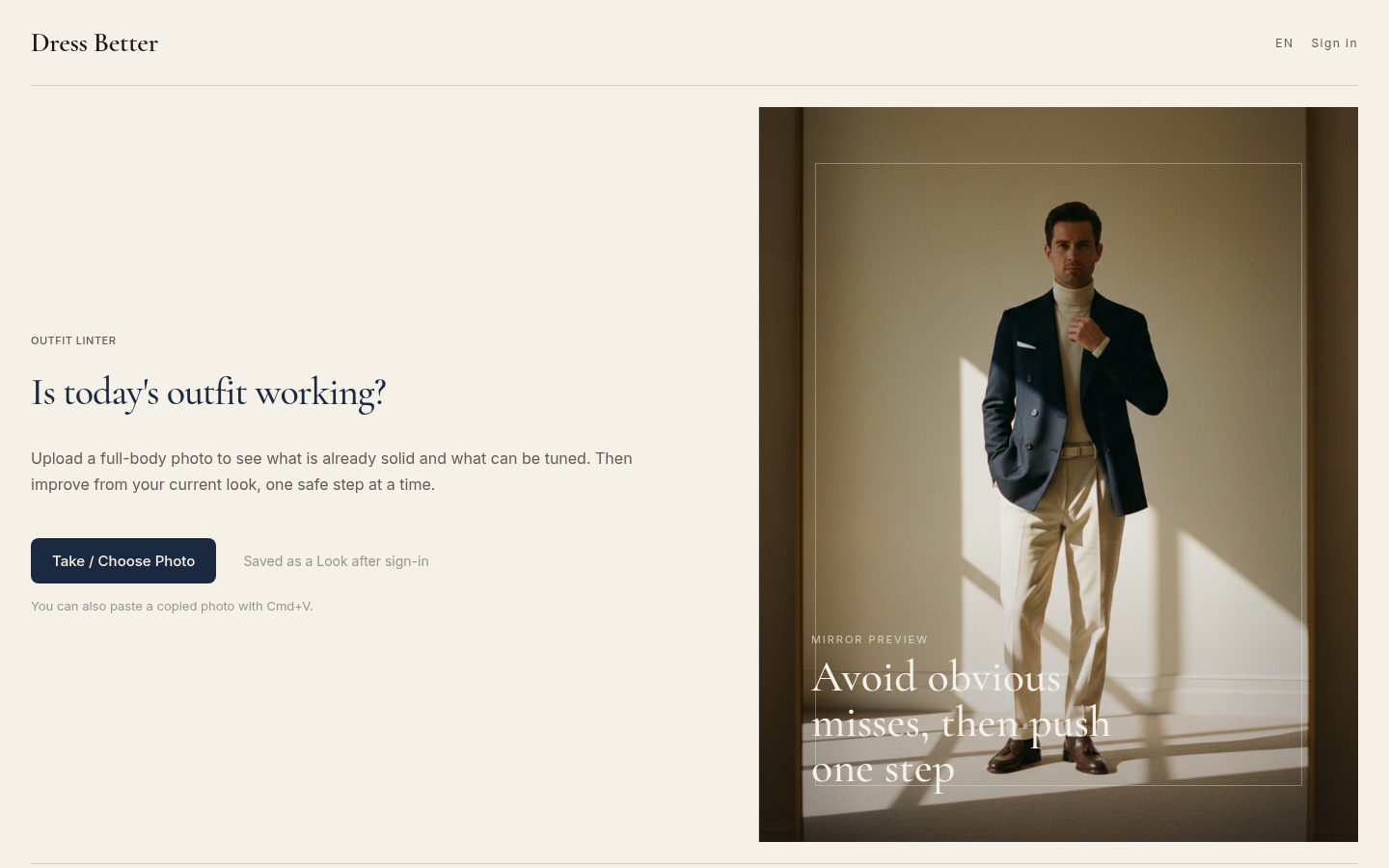
Desktop homepage first screen showing Outfit Linter eyebrow, "Is today's outfit working?" heading, Take/Choose Photo CTA button, and menswear editorial mirror preview image. Englis
FAQ
Is cuffing or stacking better for men?
Neither is better by gender; cut, fabric, footwear, and silhouette decide. Straight or slim men's jeans cuff cleanly, while tapered cuts stack well.
When should I cuff my jeans?
Cuff when the hem is longer than you want, when the denim rolls flat, and when you want to show the shoe. A short single roll is the safe default for most smart-casual outfits.
How do I cuff jeans?
Fold the hem up half an inch to one inch, press the fold flat with your fingers, and keep both legs even. Add a second roll only if you need more length removed, and check the line from the side.
How do I stack jeans with boots?
Let the fabric fall over the boot shaft and settle into one or two even folds, keeping the shaft visible. Avoid forcing a single heavy fold, and check that the denim does not drag on the ground.
What is a reverse cuff?
A reverse cuff turns the hem inside out so the denim's interior shows. It reduces bulk and can display a selvedge edge or a contrasting interior; keep the fold narrow, around half an inch.
How do I cuff baggy jeans?
Make one wide, flat cuff of about one and a half to two inches, or have the jeans hemmed if the fabric is too heavy. Avoid a tight double roll, which turns a wide leg into a bulky ring, and balance the extra weight with a substantial shoe.
Do cuffs or stacks make you look shorter?
Both interrupt the vertical line, so both can shorten the leg visually. A narrow single cuff or a clean no-break keeps the most length, while deep stacks add weight at the ankle. Shorter frames usually do better with less fabric; taller frames can carry more.
Does this advice work the same on women's jeans?
Yes. Wider legs and heels change the shoe and silhouette math, but cut, fabric, footwear, and the line you want still decide cuff versus stack.