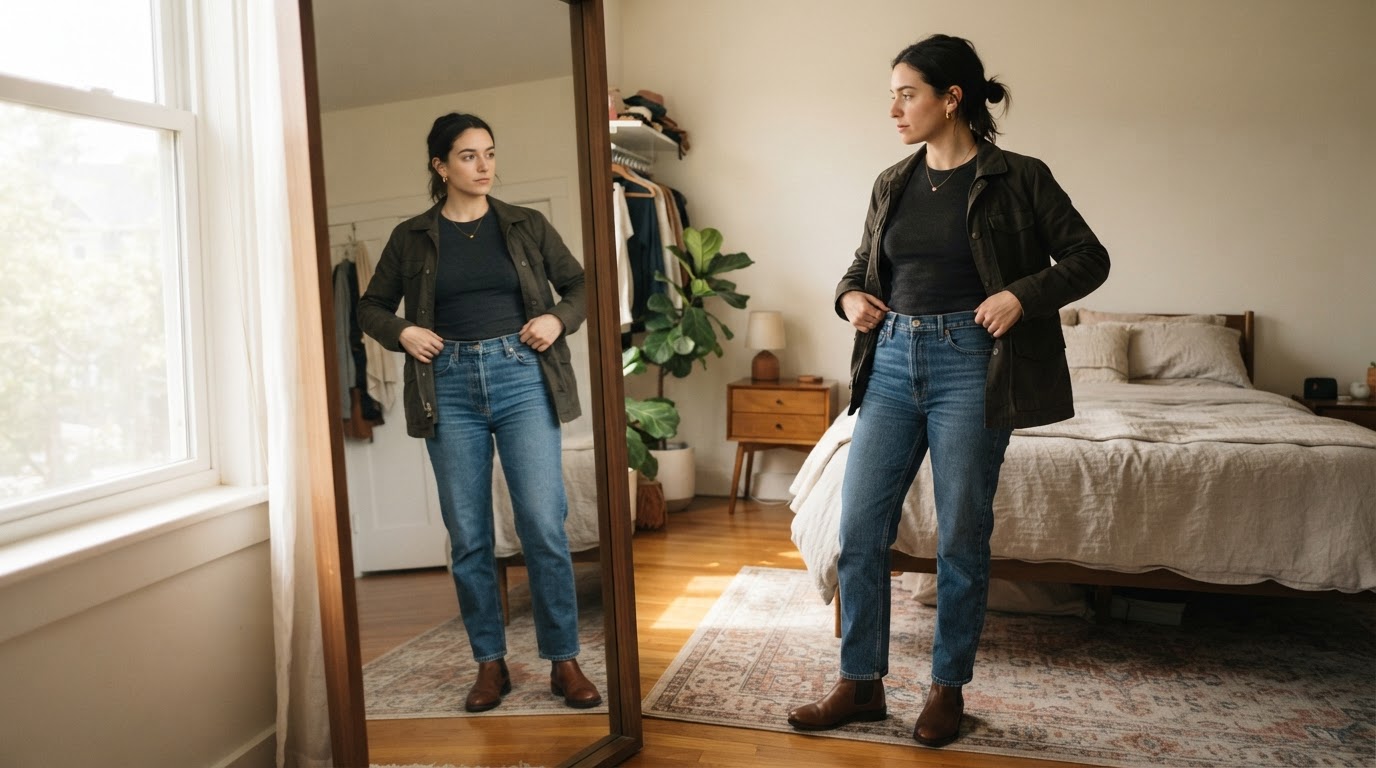
What a clothes rotation checklist is
A clothes rotation checklist is a short set of decisions that makes you cycle through the clothes you already own instead of defaulting to the same three outfits. The rotation is the cycle itself: the pieces you wear this week, the pieces resting, and the pieces waiting their turn. The checklist is what makes that cycle happen on purpose — what to sort, what to track, when to swap, and what counts as finished.
Most wardrobes do not fail because people own too few clothes. They stall because nothing decides which clothes get used, so a small set does all the work while the rest quietly ages out of the rotation. A checklist fixes the decision layer, not the shopping layer.
Why a rotation is worth ten minutes
A rotation pays off in three places.
Decision fatigue drops. You stop re-deciding from scratch every morning, because the current rotation has already narrowed the field.
Wear data replaces guesswork. After two or three cycles you can see which pieces earn their space and which ones never leave the hanger. That is better evidence than a closet clean-out done in a bad mood.
Re-wearing gets safer. Once an outfit has worked in real life — for your office, a date, a wedding, an interview — it is a known quantity. A rotation keeps those proven combinations in reach instead of buried.
The whole system runs on a 30–60 second habit: one quick note about what you wore, and one quick check before you leave.

The clothes rotation checklist
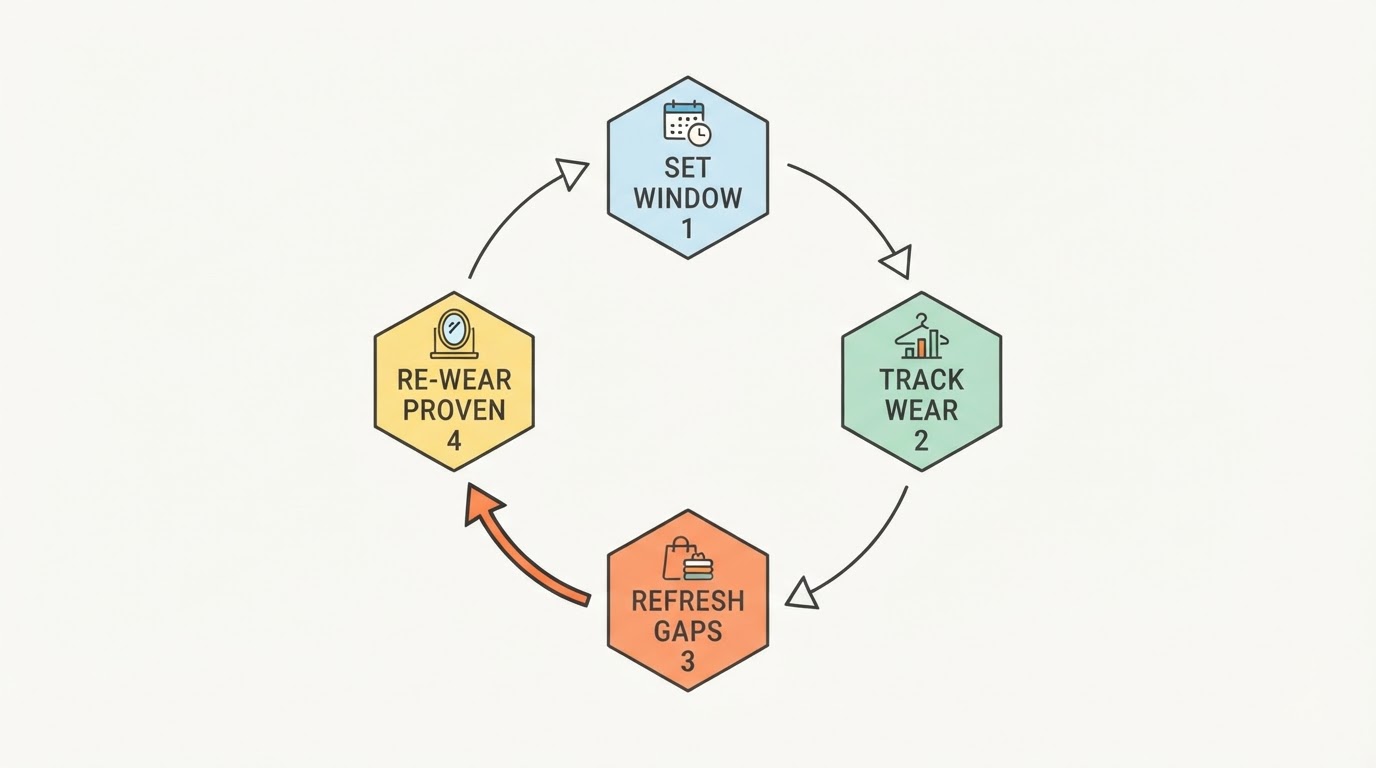
Run these seven checks in order. One sitting is enough for the first pass; after that, the checklist mostly becomes a weekly two-minute review.
# | Check | What "done" looks like |
|---|---|---|
1 | Set the rotation window | You know whether you rotate weekly, per laundry cycle, or per season |
2 | Sort by use case, not by color | Clothes are grouped as work, casual, and occasion |
3 | Choose a baseline rotation | Five to seven pieces cover an ordinary week |
4 | Tag re-wear confidence | Each piece is marked proven, unproven, or needs a fix |
5 | Schedule the swap | A fixed day or cue starts the next cycle |
6 | Log what you wear | Every outing gets one tick, note, or photo |
7 | Refresh the edges | Laundry, repairs, and gaps are handled before the next window |
1. Set the rotation window
Your window is how long one cycle lasts: one week, one laundry cycle, or one season. Pick the shortest window you can realistically maintain. A week is the default for most people, because it matches how often laundry and work schedules repeat.
2. Sort by use case, not by color
Split the wardrobe into work, casual, and occasion. Use-case sorting answers the real morning question — where am I going? — and prevents the classic mistake of building a rotation that looks tidy but has nothing to wear to an interview.
3. Choose a baseline rotation
Pick five to seven pieces that can cover an ordinary week: a couple of tops, two bottoms, one layer, and shoes that work with both. This is a default set, not a rule. If you work from home, the baseline may be three pieces; if you are in an office five days a week, it may be ten.
4. Tag re-wear confidence
Mark each piece as proven, unproven, or needs a fix. Proven means you have worn it out and nothing about it bothered you. Needs a fix means a tailor, a wash, or a missing button stands between it and the rotation. This tag is what turns a rotation into a re-wear system: you are not tracking wear for its own sake, you are accumulating outfits you can trust.
5. Schedule the swap
Put the next swap on a fixed cue — Sunday evening, laundry day, or the first of the month. A cue beats a reminder, because it arrives whether or not you remembered to set an alarm.
6. Log what you wear
One tick mark, one note, or one photo per outing. The method matters less than the record. If a piece has gone unworn for two cycles, the log tells you; if an outfit has worked twice, the log tells you that too.
7. Refresh the edges
End each cycle with ten minutes on laundry, repairs, and gaps. Repairs go to the tailor or the sewing kit. Gaps go on a list to solve with something you already own before you consider buying.
Completion standard. Your rotation is working when three things are true: every piece in the current rotation was worn at least once in the last two cycles, you have at least three proven outfits you can repeat without thinking, and the next swap is already on the calendar. If any of those is false, the missing piece is your fix — not a bigger wardrobe.
Key answers at a glance
How long does setup take? One sitting of 30–45 minutes for the first pass; each weekly review after that takes about two minutes.
How many clothes belong in rotation? Usually five to seven core pieces plus shoes for an ordinary week. More only if your week spans very different settings.
Do I have to catalog everything? No. Start with the pieces you already wear and add the rest as they enter the rotation.
How do I know an outfit is safe to re-wear? You have worn it for the occasion it was meant for and nothing needed adjusting. That is a proven outfit — keep it in the fast lane.
What if I get bored of the rotation? Boredom is data: swap two pieces earlier than scheduled, but keep the proven outfits intact. The rotation is a floor, not a ceiling.
Free checklist and PDF options
You do not need to buy anything to run this. The table above works as a free checklist — copy the seven checks into a notes app, a spreadsheet, or a notebook. If you prefer paper, print the table or copy it into a document and export a PDF from whatever writing app you already use. Any word processor or notes app can do that in one step.
What matters is that the checklist lives where you will see it: on the fridge, on your phone's home screen, or inside the note you already open each morning. A PDF you never open is worth less than a tick mark on a scrap of paper.
Women's version and wardrobe basics
The same seven checks apply regardless of who owns the wardrobe; only the labels change. Where a men's list might name a button-down, a plain tee, and a blazer, a women's version might name a blouse, a knit, a dress, and a structured jacket. The logic is identical: cover work, casual, and occasion, then rotate proven combinations.
For a wardrobe-basics starter set, keep it deliberately small and replaceable:
- two tops that fit well and take a wash
- two bottoms that work with both tops
- one layer for temperature swings
- shoes that match the majority of your week
- socks and underlayers you never think about
- one occasion outfit you have already worn once
If your essentials list is longer than this, keep the extra pieces on a long-term list rather than in the rotation. A basics list is about coverage; the rotation is about actually using it.
What breaks a rotation
Three failure modes account for most broken rotations.
Buying before rotating. The fix: finish one full cycle before you shop. The log will usually name the gap more precisely than a shopping list would.
Treating every item as equal. The fix: give proven pieces a fast lane and unproven pieces one experiment slot each week.
No end point. The fix: use the completion standard above. An unmeasured rotation slowly turns back into the same three outfits.
Tracking re-wear without re-deciding
Paper works: a tick on a calendar, the reversed-hanger trick, or a laundry basket that acts as the worn pile. All three give you the same signal — which pieces are earning their space.
A tracking app adds the history part. It can keep the outfit, the feedback, and a before-and-after record in one place instead of leaving them scattered across photos and notes. Dress Better, a web app built around photographing an outfit for feedback, describes its Look History as saving each analyzed outfit as a Look — the original photo, the stylist feedback, and a before/after comparison image — in a timeline, with a Ready Again flag on outfits the history marks safe to repeat. If a paper checklist keeps you honest, stay with paper. The app is worth trying when what you want is a record of what already worked.
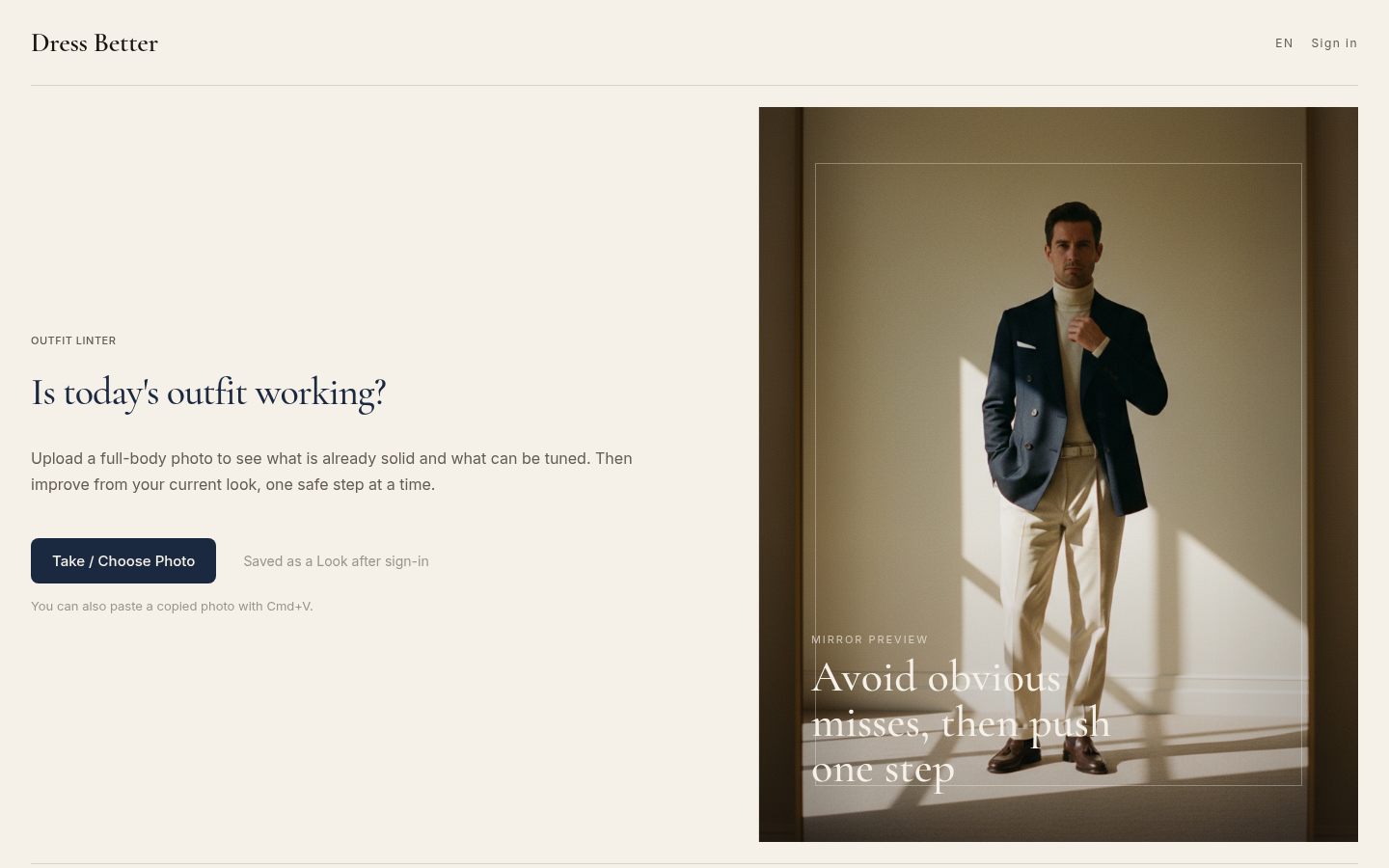
Desktop homepage first screen showing Outfit Linter eyebrow, "Is today's outfit working?" heading, Take/Choose Photo CTA button, and menswear editorial mirror preview image. Englis
Follow-up questions, grouped by intent
Getting started
What is the first thing to do? Set the rotation window and list the pieces you wore in the last two weeks. That is your starting rotation; everything else can join later.
Can I rotate a very small wardrobe? Yes. With fewer than ten pieces, tighten the window to a laundry cycle and treat each piece as a fixed rotation slot.
Free and printable
Is there a free clothes rotation checklist? The seven checks in this article are the checklist. Copy them into any free notes app, or print the table if paper suits you better.
Do I need a PDF? No. A PDF is just another copy; use one only if it is the version you will actually open or pin up.
Fit to your wardrobe
Does the checklist work for a woman's wardrobe? Yes. Swap the example items for the pieces you actually wear; the work, casual, and occasion split and the re-wear tag stay the same.
Where do basic wardrobe essentials fit? Keep a short essentials list as the coverage layer and rotate within it. Essentials answer whether you have something for the occasion; rotation answers which pieces you wear this week.
Tracking
Do I need to log every single day? No. Log the outfits you plan to repeat; those are the ones where the record pays for itself.
How do I track re-wears without an app? Use one tick mark per wear on a paper list, or reverse the hanger of every piece you wear. At the end of the cycle, anything still facing the normal way has not been worn.
How do I stop re-deciding the same outfit every morning? Move proven outfits into a short repeat list of three to five combinations and let the rotation refill that list. Deciding once is the whole point.
The one-line version
Set a window, sort by use case, tag what is proven, log what you wear, and swap on a cue. The rotation is finished when every piece in it has been worn in the last two cycles, you have at least three proven outfits, and the next swap is scheduled.