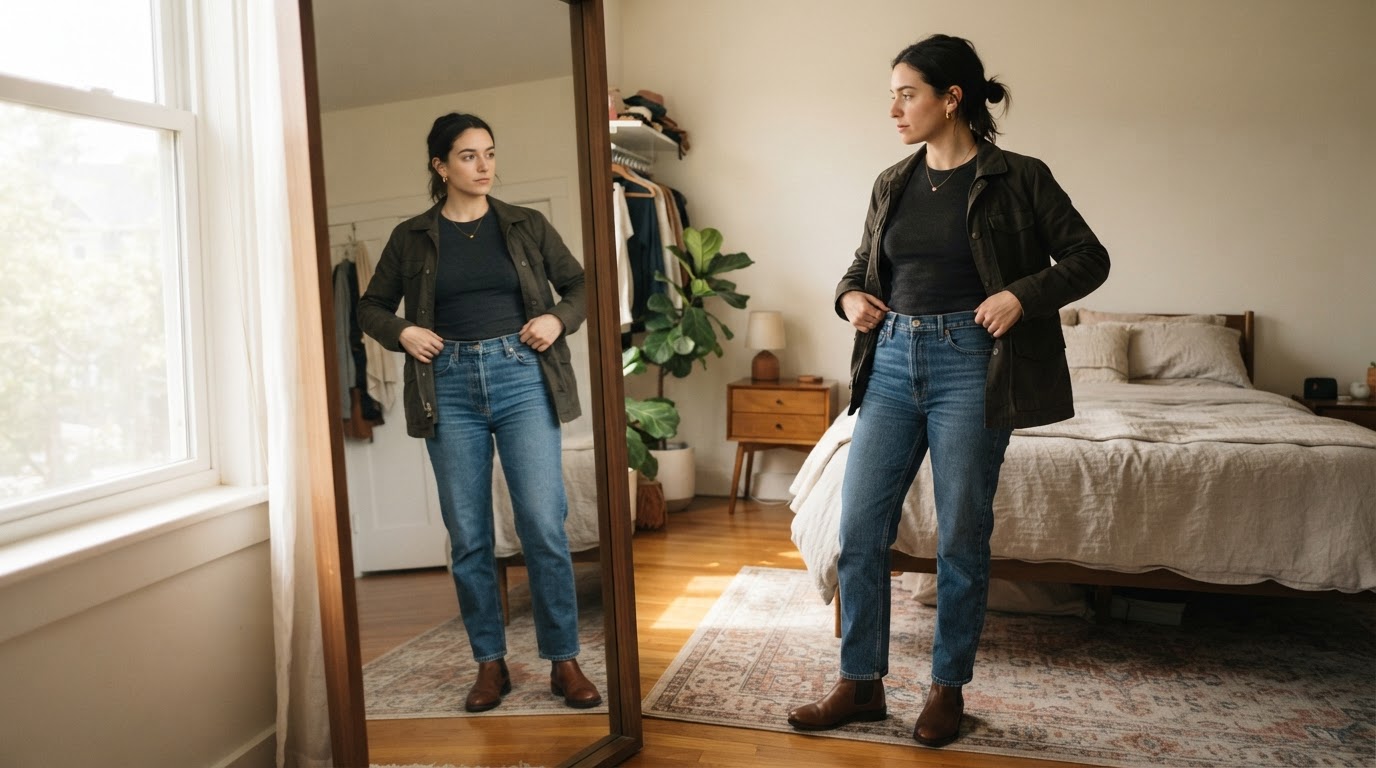
The short answer
Check your outfit before you leave by stepping back, looking at the complete look rather than individual pieces, and scanning four things in a fixed order: color, proportion, material, and occasion. Fix the two smallest conflicts you find, then stop.
Most pre-departure outfit problems are small and visible: a color that fights the rest, a hem that breaks the line, a wrinkled sleeve, shoes that belong to a different outfit. A useful check is a subtraction exercise. You are looking for the one or two details that pull attention away from an otherwise fine look, not for a reason to change everything.
Key answers at a glance
- Color: Count the colors you can see from about two meters away. Two or three usually read as intentional; a fourth needs to be a deliberate accent rather than an accident.
- Proportion: Find where your top ends and where your waistband sits before you judge any single garment.
- Material: Wrinkles, drape, shine, and lint are the details people notice at conversation distance.
- Occasion: Name the event and its dress code out loud. If the outfit cannot answer that question, the mismatch matters more than any styling detail.
- Fix order: Change the smallest thing that removes the most visible conflict — often the shoes, a belt, or a tuck.
- Stop rule: Once two conflicts are fixed and nothing else competes for attention, you are done.
A 60-second routine, in order
Run the same checks in the same order every time. The order matters because a fix in one dimension can change another: switching shoes can rescue a color story, and a tuck can fix a proportion problem without touching the colors.
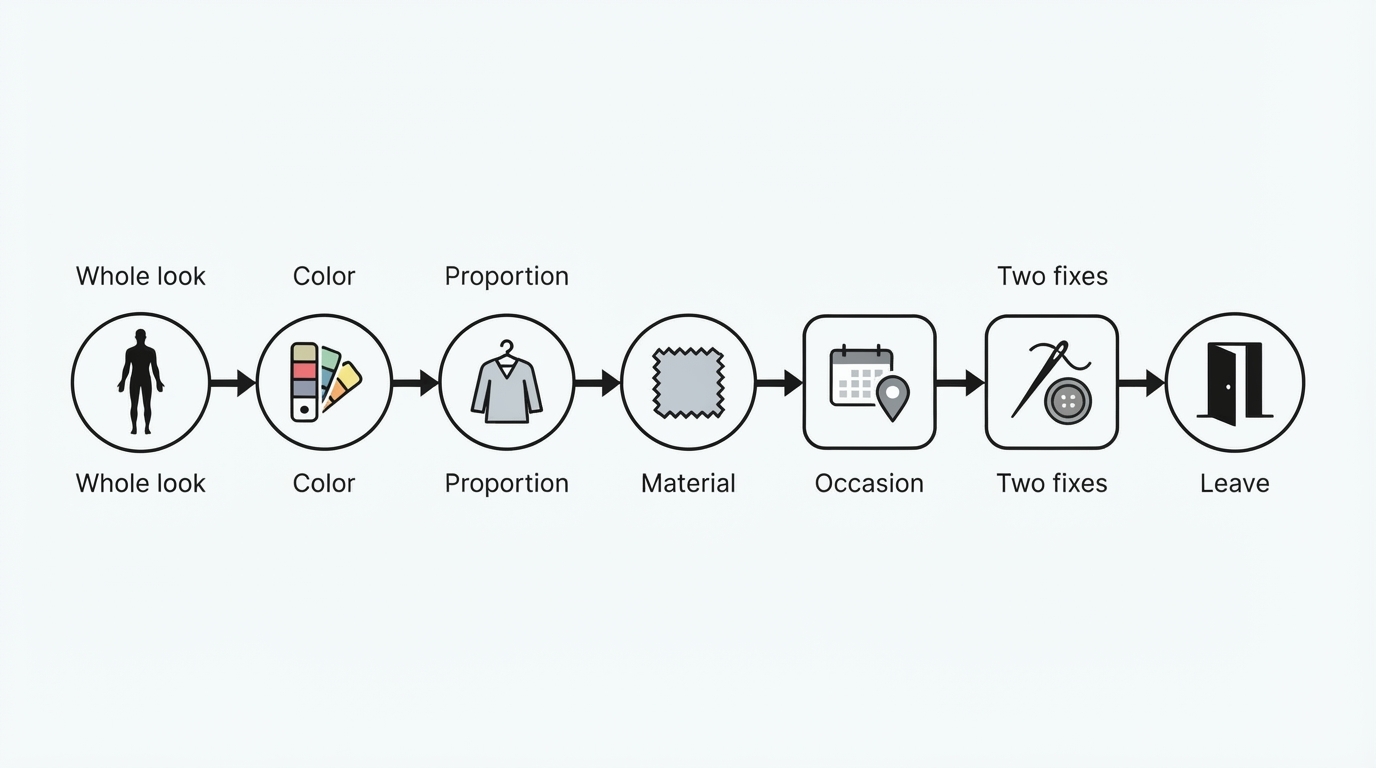
- Step back. Stand about two meters from a full-length mirror, or take one full-body photo with your phone. Look at the entire silhouette before you zoom in on details.
- Scan color. Note how many colors are visible at once and whether one of them leads. Check that your shoes, belt, and bag are part of the same color story instead of four separate ones.
- Check proportion. Look at the relationship between your top, waistband, and hem. Check whether the layers end at deliberate points instead of piling up around the same line.
- Check material and condition. Look for wrinkles, lint, pills, visible tags, and shoes that are scuffed or out of shape. Check the fit at the shoulders and the break at the ankle.
- Name the occasion. Say the plan out loud: work, a date, an interview, a wedding, or a party. Then ask whether this outfit is the safe version of that answer.
- Fix the two smallest conflicts. Make the smallest changes that remove the most visible problems.
- Do one final look. Check the front, the side, and the back in the mirror or photo, then leave.

The check is complete when you can name what you fixed and nothing else in the look is asking for attention. If you are still debating a third change, the debate itself is usually the answer: leave it.
The two-conflict rule
Fix the two smallest conflicts first, because a quick correction to something visible reads as more polished than a complete outfit change — and because a last-minute overhaul usually creates a new problem you have no time to check.
Rank each conflict by how visible it is and how fast it is to fix. The fastest fixes are swaps and removals, not additions:
What you notice | Fastest fix |
|---|---|
Shoes pull the eye away from the outfit | Switch to the plain pair that matches the darkest or lightest color you are wearing |
The shirt length breaks the line at the hip | Tuck it, or adjust the hem once and re-check the silhouette |
A third color is fighting the first two | Remove the accessory carrying it |
Wrinkles or lint on the front of the outfit | Steam, press, or swap the piece |
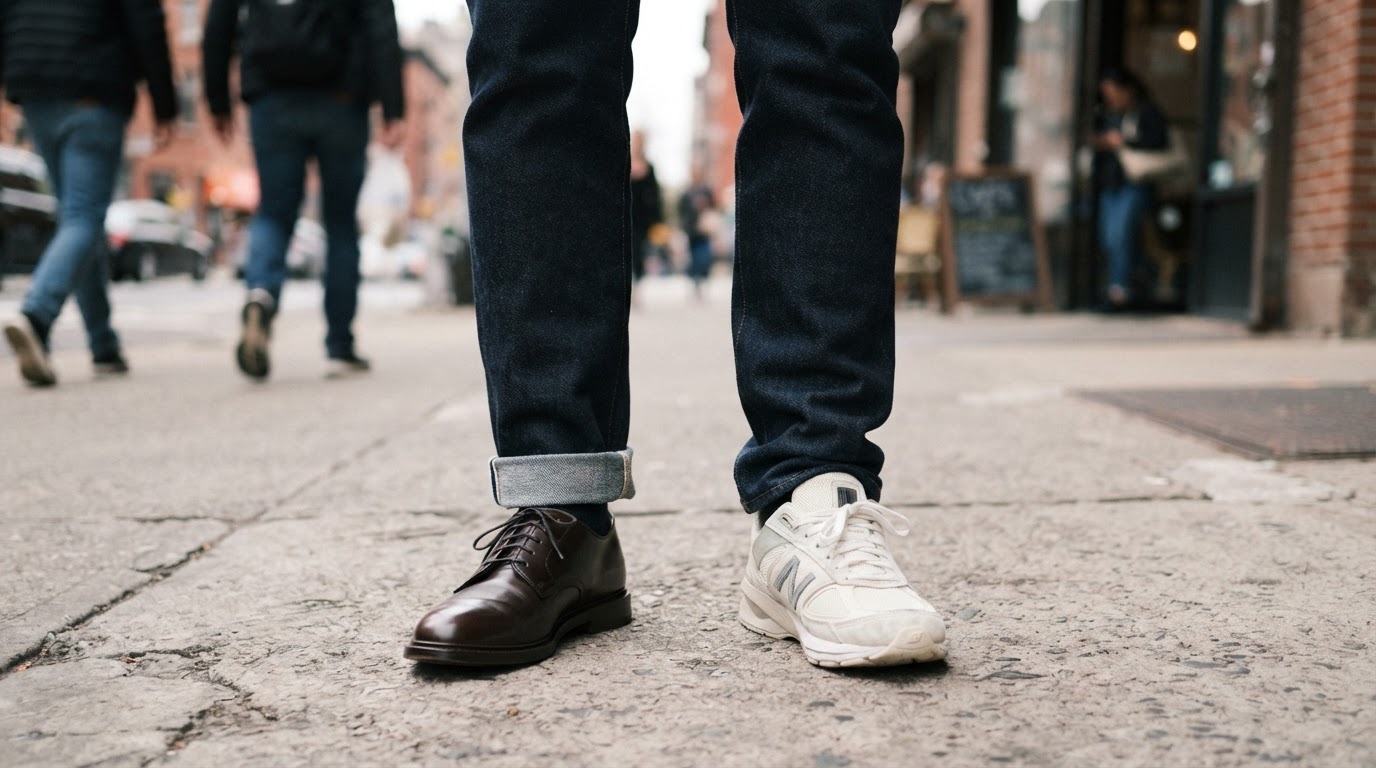
Cuffs bunching at the ankle | Straighten the hem and check the shoe line again |
One loud accessory is doing all the talking | Take it off and re-check |
If the same conflict shows up every week, the problem is usually the piece rather than the day. That is a wardrobe note for later, not a reason to keep changing clothes now.
Mistakes that survive a check
Most outfit problems that survive a pre-departure check come from the same few habits: judging pieces instead of the whole, adding a fix instead of subtracting a problem, and checking in a small bathroom mirror under warm light.
- Checking items one by one. A shirt and trousers can each look fine and still fight each other. Step back first.
- Adding instead of subtracting. A scarf, a jacket, and a new belt rarely fix a color problem; removing one usually does.
- Ignoring the shoes. Shoes carry a lot of an outfit's formality, so check them with the full look instead of putting them on at the door.
- Trusting the wrong mirror. A small mirror and warm indoor light hide wrinkles and color clashes. Use a full-length mirror near daylight when you can.
- Leaving the check to the door. The last thirty seconds before leaving is the worst time to discover a problem. Run the routine while you still have time to change one thing.
When a second opinion helps
Use a photo and a structured second opinion when you genuinely cannot tell whether a detail matters. A full-body photo flattens the look into roughly what other people see, which makes small conflicts easier to spot than they are in a mirror.
A mirror, your phone camera, and one honest friend remain the cheapest options. If you want feedback that is specific rather than reassuring, one example is Dress Better, an AI outfit checker that works from a full-body photo or a pasted image. Its AI outfit analysis reviews color, proportion, material, and occasion, then tells you what is safe to keep and which small conflicts are worth fixing first. There are no height, weight, or style-preference questions to answer, and after you sign in the results are saved as Looks, with the upload page showing the free allowance. Keep the tool in its place: it replaces the mirror check, not your judgment. You still decide what to wear.
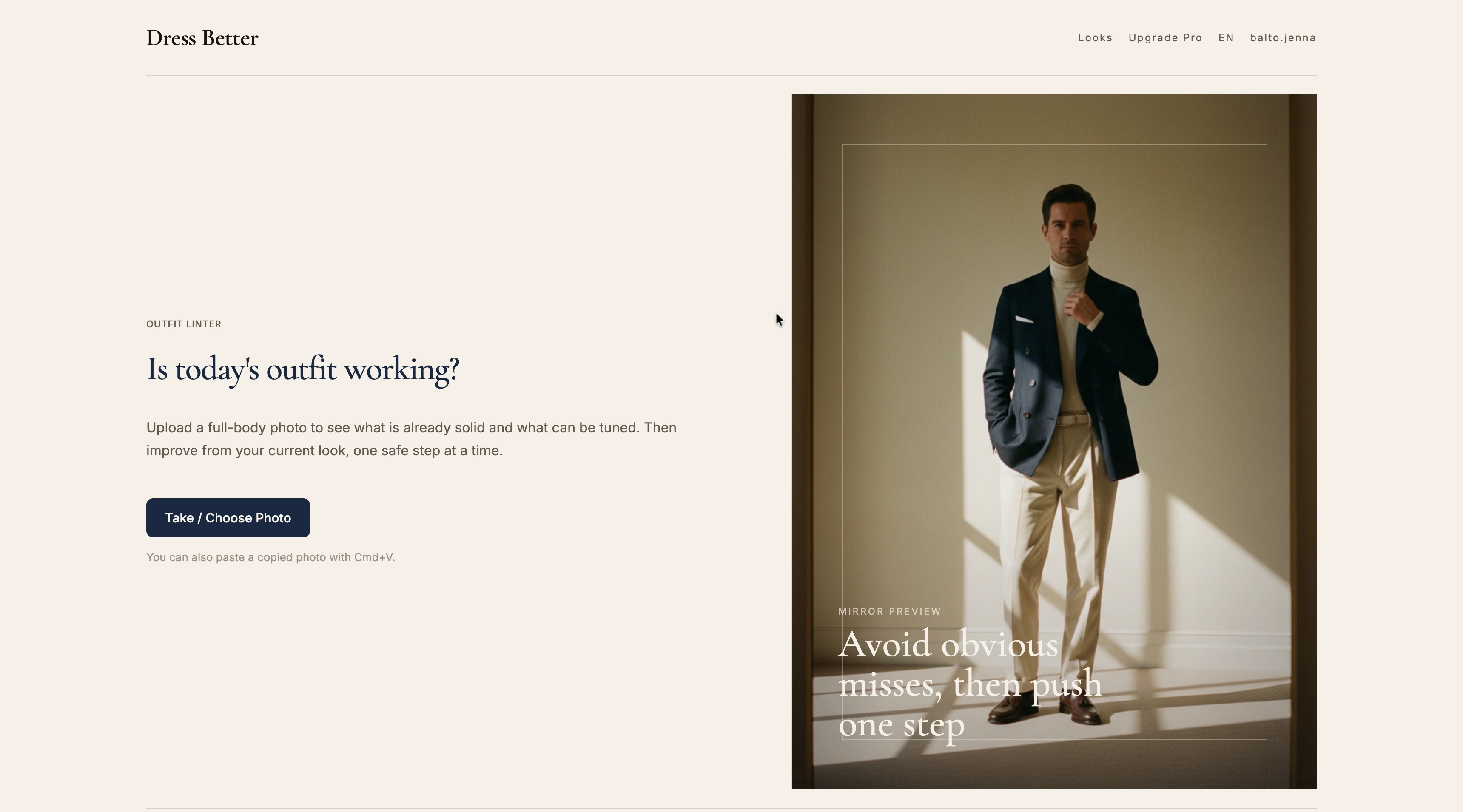
Felo product screenshot.
A one-page checklist for the door
- Full look seen from about two meters, in a mirror or a photo
- Colors counted: two or three, with one leading
- Waistline, hem, and layer endings checked
- Wrinkles, lint, and shine checked in daylight
- Occasion and dress code named
- Two smallest conflicts fixed
- Shoes checked with the full outfit
- One final look at the front, side, and back
You are done when you can name what you fixed and nothing else is asking for attention. Then walk out.
Pre-departure questions, answered directly
What should I check first?
Check the whole silhouette first, then color, then details. Starting with a single garment makes it harder to see whether the outfit works as one look, which is the thing other people actually see.
How many colors are too many?
Count what is visible from about two meters away. Two or three colors usually read as one outfit; when a fourth appears, it needs to be intentional — a small accent rather than a second competing story.
How do I check my outfit without a full-length mirror?
Use your phone camera. Take a full-body photo with the phone held vertically at chest height, and check the front, side, and back. The photo is often stricter than a mirror because it removes the angles where you were quietly correcting your posture.
What if I only have a minute?
Do the two highest-value checks: look at the whole look, then look at the shoes. A deliberate silhouette with the wrong shoes still fails, and a plain outfit with the right shoes usually passes.
What if I notice the problem after I leave?
Fix what can be fixed in thirty seconds — remove an accessory, adjust a collar, straighten cuffs or a tucked hem — and then stop. A calm outfit with one small flaw beats a visible, frantic fix-up. Use the next mirror you pass to check the front once.
Should I change the outfit or just fix a detail?
Fix a detail unless the occasion is the problem. If the outfit is wrong for the plan, no detail will rescue it; if the plan matches and one detail is off, changing the whole outfit usually trades a small problem for a bigger one.
How should this change for an interview or a wedding?
Name the dress code first, then reduce the variables: fewer colors, cleaner lines, well-kept shoes, and no piece you have never worn before. The more formal the occasion, the more the check is about fit and condition rather than style choices.