The short answer: what an app should do for you
If you are searching for an app to track what I wore every day, the useful version does three jobs. It captures the outfit in under a minute, it stores a verdict next to the photo, and it later tells you which of those outfits you can safely wear again.
A photo folder can only do the first job. It remembers what you wore but not whether it worked, so the next time you face the same decision — the same interview, the same dinner, the same cold morning — you are still guessing.
That gap is why most outfit logs die after two weeks. Logging feels like homework, so you stop. Re-reading the log costs more effort than it saves, so the record becomes dead storage. A log worth keeping answers three questions in seconds: What did I wear? Did it work? Can I wear it again? Build the habit around those three answers and everything else is optional.
What to capture each day
You do not need a lot of fields. Four items give you a record that is still useful six months later.
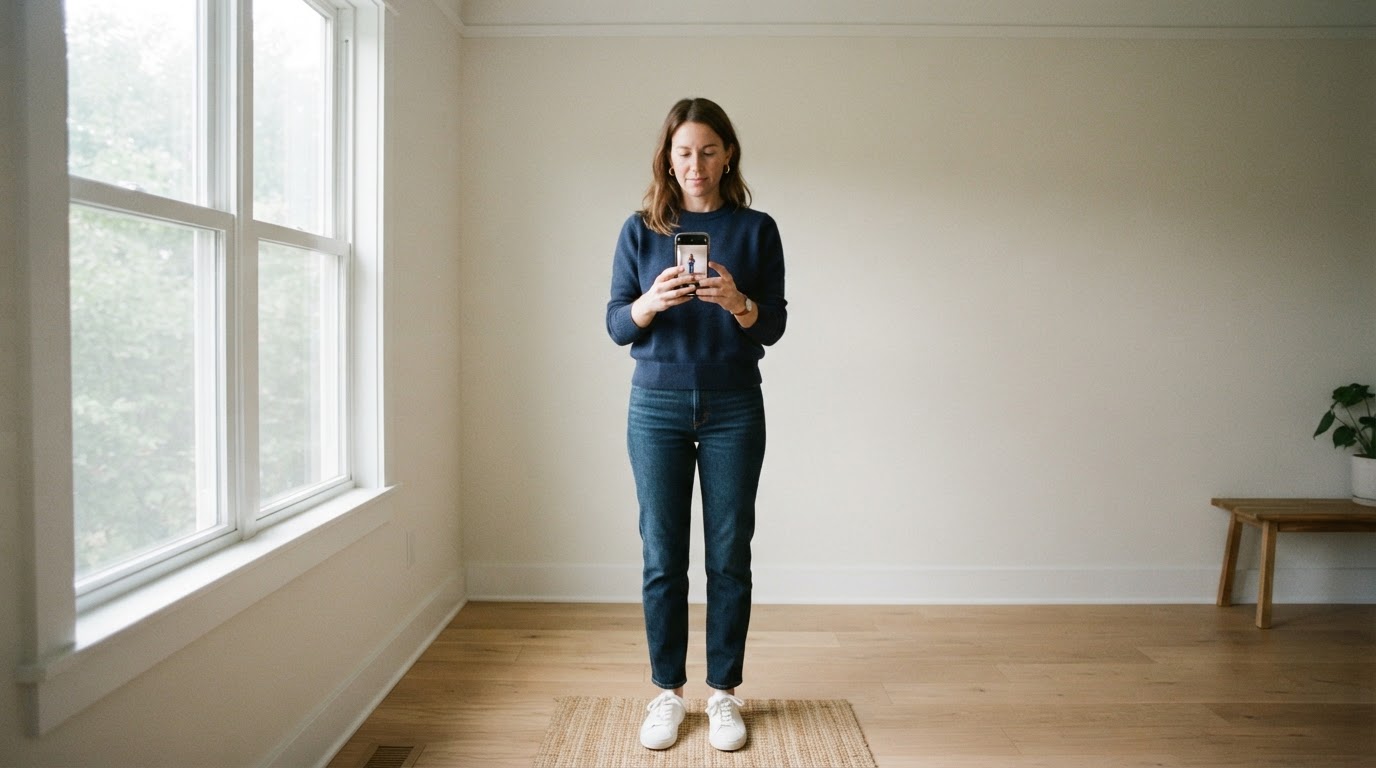
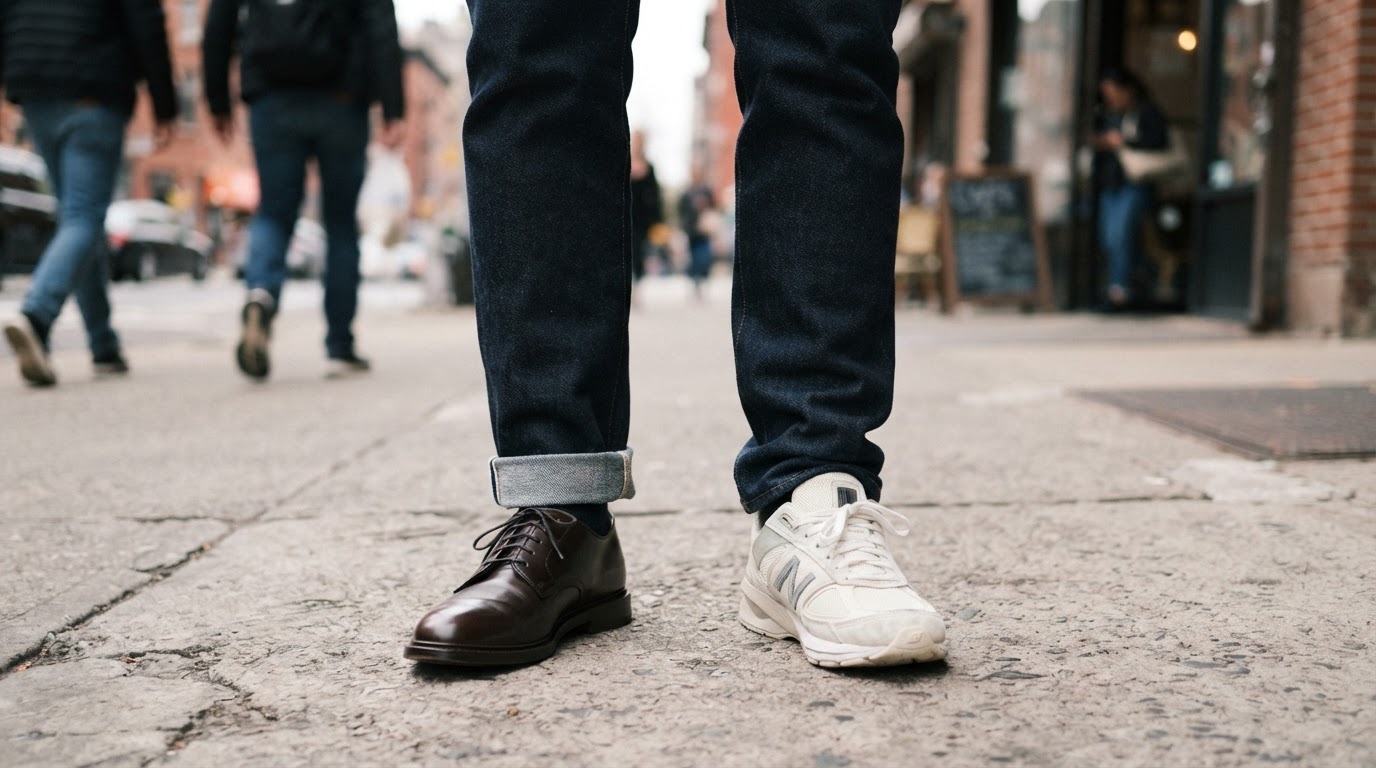
- One full-body photo. Include your shoes. Shoot in the same spot, at roughly the same distance, with the light behind the camera rather than behind you.
- One context line. Occasion, weather, and anything unusual: "client presentation, cold, travel day". Context is what makes an old verdict reusable; a keep verdict from a beach weekend will mislead you in a boardroom.
- One thing that worked. Be specific: "navy jacket with gray trousers read clean", not "looked fine".
- One smallest fix. Not a full restyle — just the single change that would have improved the outfit: a shorter hem, a belt that matched the shoes, one fewer pattern.
Four fields are enough because they map to decisions. The photo proves what you wore, the context tells you where it applied, the worked note protects the combinations that earned their place, and the fix note gives you a queue of small improvements you can actually complete.
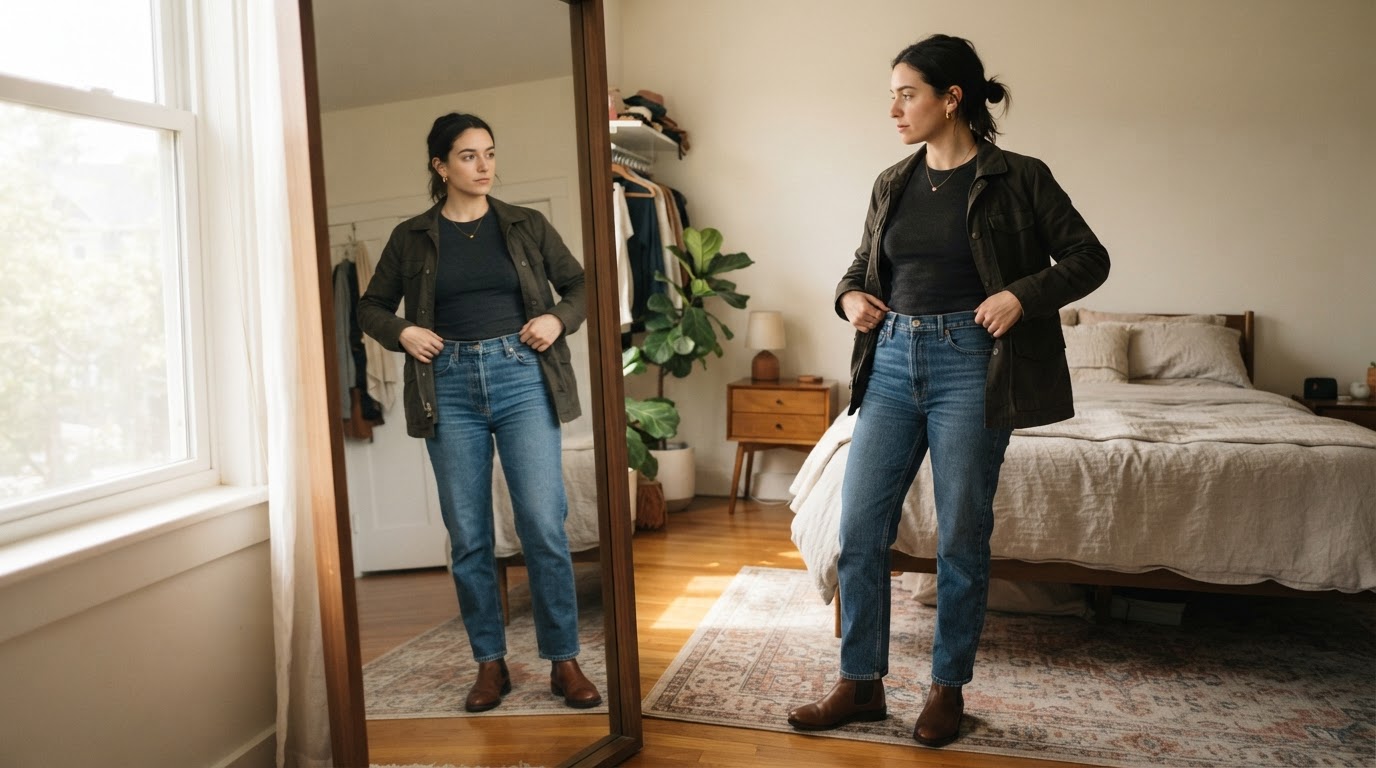
Aim for a consistent capture standard rather than a perfect one. A mirror photo taken before you leave is worth more than a staged photo session you will never repeat. On a busy day, a photo plus one line still counts; a skipped day costs nothing as long as the next entry is honest.
A routine that survives a real morning
The routine has to fit the moment before you leave, so keep it to four moves in a fixed order.
- Take the photo after your shoes are on, with the whole outfit in frame.
- Write the context line while you are still standing there. Thirty seconds now saves a minute of remembering later.
- Name one thing that worked and one fix. Two short phrases are enough.
- Save it and walk out. Do not edit, filter, or improve the note; the point is the record, not the polish.
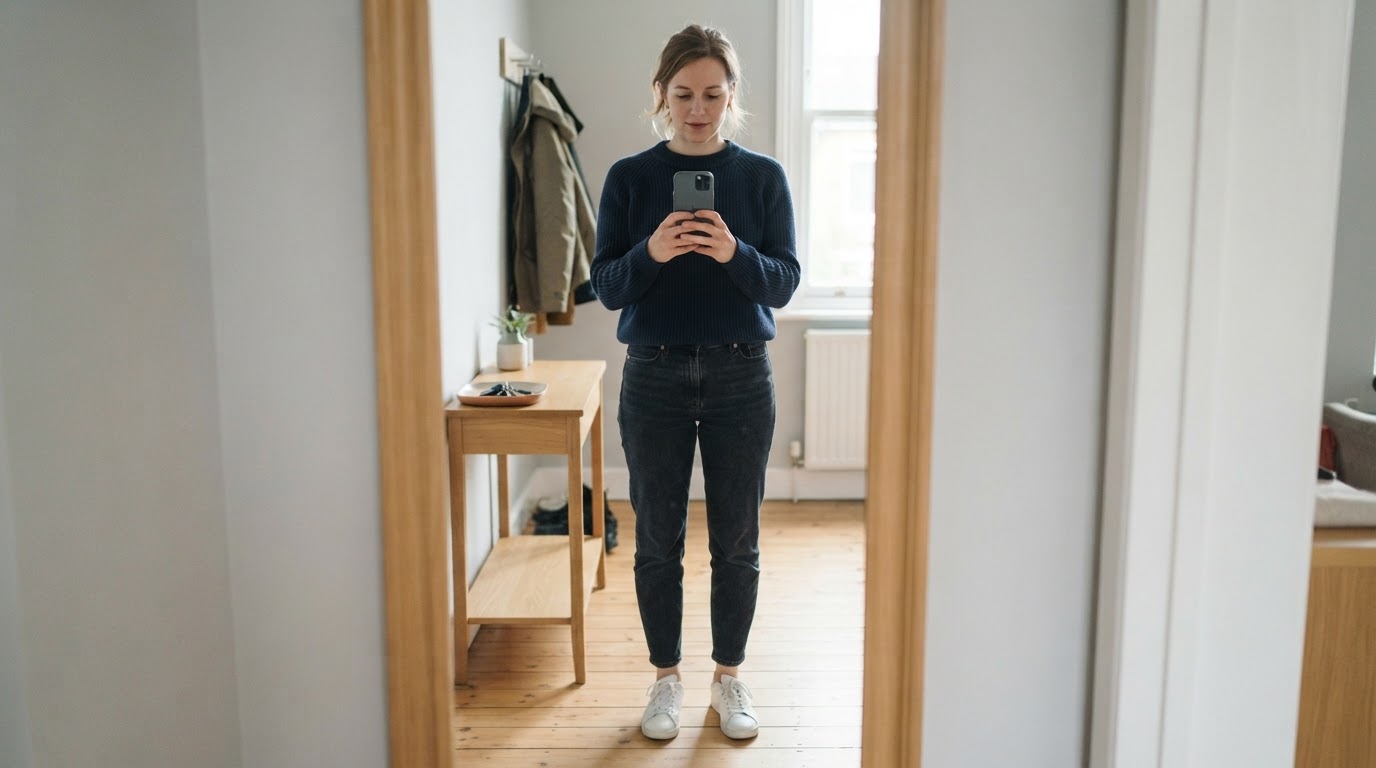
The completion standard is simple: if the whole loop takes longer than a minute, cut a field until it does. Start with the photo alone if you must, because the habit is the foundation and the notes can come back later. A log with two fields you actually fill beats a ten-field template you abandon.
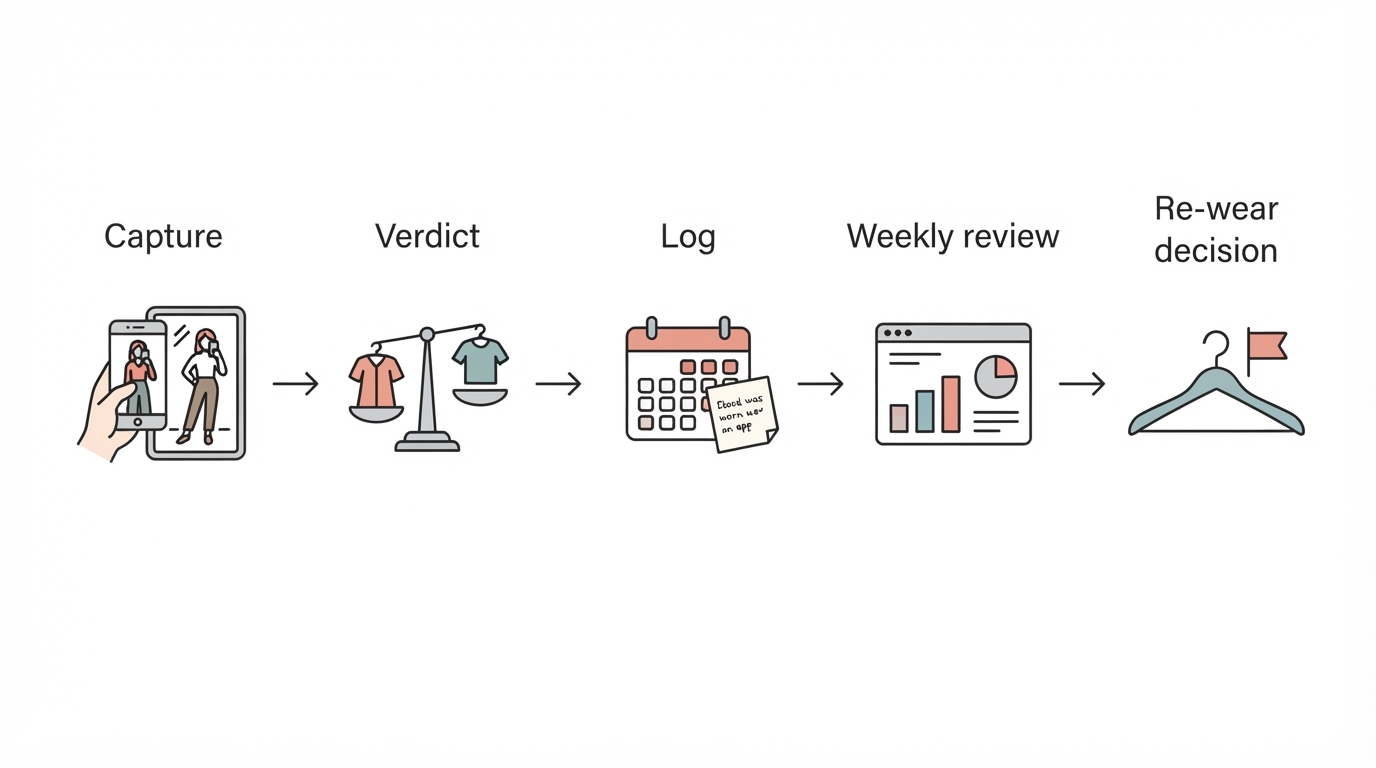
Here is the loop in one line: capture, verdict, log, weekly review, re-wear decision. Only the last step creates future value, which is why the review belongs on your calendar rather than in your good intentions.
When an app does the logging for you
A daily log survives when the tool carries part of the work. That is the idea behind Dress Better's Look History, which is built for people who save outfits and later want to know what is safe to repeat.
Its tracking model is straightforward. Each time you photograph an outfit, the result is saved automatically as a Look, and every Look keeps three things together: the original photo, the feedback, and a corrected-version image. Instead of a folder of disconnected pictures, you get a timeline of your own outfits that you can scan in order. The Ready Again flag marks Looks that are safe to wear again, so an outfit you already proved out can go back into rotation without repeating the analysis. Because Looks belong to your account, the record is waiting the next time you sign in, including from a different device.
That last part matters more than it sounds. The question "can I wear this again?" usually arrives while you are getting dressed, not while you are sitting at a desk. If the record only lives on the phone that took the photo, or only in your memory, you will not consult it.
Two honest notes about an app-assisted log. First, an app can only judge what the photo shows: it does not know how the fabric felt after four hours, whether the collar bothered you, or how the room's heating behaved. Keep your one-line context for that. Second, the value is in the reuse decision, not in grading every morning. A log that tells you which outfits are already proven is more useful than a log that numbers every day.
If you would rather not keep an archive of photos, a plain text record — items, context, verdict — still works. You trade color and proportion detail for privacy and speed, and that is a reasonable trade for plenty of people. The structure matters more than the medium.
How to review the log so it changes decisions
A daily record becomes valuable in a weekly review. Ten minutes is enough.
Read the week's entries in order and ask three questions:

- Which outfits got a keep verdict twice or more? Those are your defaults. Move them to the front of the closet or mark them as your safe rotation.
- Which fix appeared at least twice? A fix that repeats across days is a wardrobe issue, not a daily one: a hem that needs shortening, a jacket that never sits right, shoes that clash with half your trousers. Fix it once.
- Which entries carry no judgment? Photos with no verdict suggest the logging step is too heavy. Simplify the template instead of blaming yourself.
Then set one rule for the week ahead. For example: any outfit with a keep verdict and no outstanding fix goes into the rotation, and everything else gets one small adjustment before it is worn again. A rule like this turns scattered morning guesses into a small, personal wardrobe policy — the thing you actually wanted when you started looking for an app.
Keep the review short and repeatable. The point is not to analyze your style for an hour; it is to convert a week of small observations into two or three decisions that save time later.
The limits of any outfit log
Tracking what you wore has real limits, and knowing them makes the record more useful.
A mirror photo flattens a lot. The lighting in your hallway is not the lighting at your destination, a photo cannot show how a fabric drapes when you move, and it cannot tell you whether you felt comfortable. Treat the record as evidence about the outfit you assembled, not a verdict on how the day went.
A log you never review is just storage. The daily capture is cheap, but the value is extracted in the review, so put the review where it can actually happen.
Photo logs are also sensitive. If keeping an archive of daily photos feels like too much, design around it: use text-only entries, keep the log local, or delete the images once you have recorded the verdict. Consistency beats completeness here as well — a partial log you trust is worth more than a complete log you avoid updating.
FAQ
Do I need a dedicated app to track what I wore every day?
No, but the app has to earn its place. Your camera roll plus a notes app can hold a photo and a verdict. A dedicated tool is worth it when it saves the entry for you, keeps the photo, the feedback, and the corrected version together, and flags which past outfits are ready to wear again — the kind of tracking Dress Better's Look History is designed around.
How long should each entry take?
Under a minute. If an entry takes longer than choosing the outfit, you will stop making entries within a month. Trim fields until it fits.
What if I forget to log a day?
Skip it. Do not rebuild it from memory at the end of the week, because a guessed verdict pollutes the record. The log is a sample of your real days, not a diary you owe anyone.
Can I track outfits without uploading photos?
Yes. Write down the items, the occasion, and the verdict. You lose detailed feedback on color and proportion, but you keep the memory and the reuse decision.
How do I decide an outfit is safe to re-wear?
Re-wear safety comes from a previous verdict plus unchanged conditions: the same fit, a similar occasion, and no outstanding fix. If a flag such as Ready Again has already marked a saved Look as safe to wear again, use that as your starting point rather than re-evaluating a proven outfit from scratch.
What should I write if I do not know whether the outfit worked?
Write "unclear" and move on. One word keeps the habit alive, and a run of unclear entries is useful: it tells you to look at color, proportion, or occasion separately instead of trusting a general impression.
Start tomorrow morning
Tomorrow, before you leave, take one photo and write three lines: the context, one thing that worked, and one smallest fix. Do that for a week, then spend ten minutes reviewing. If the review tells you which outfits are ready to repeat, you have built the thing you were looking for: an outfit record that answers questions instead of collecting files.
If you would rather have the record assembled for you, Dress Better's Look History and Ready Again flow is built for exactly that loop — save today's outfit, and let your history tell you when it is ready to wear again.